Warped
A 3D top-down isometric puzzle game.
Overview
Warped is a 3D top-down isometric puzzle game where the player must escape from a mysterious underground temple by rotating the magical room they’re in to traverse areas otherwise unreachable.
My Role
Sole Designer | Lead Design | Level Design | UI & 2D Art
The game currently has 8 levels in total ↓
Duration
4 months, 2023.9 - 2023.12
Team Size
4
Tools and Environment
Unity,Blender,Photoshop
Mechanics
Room Rotation
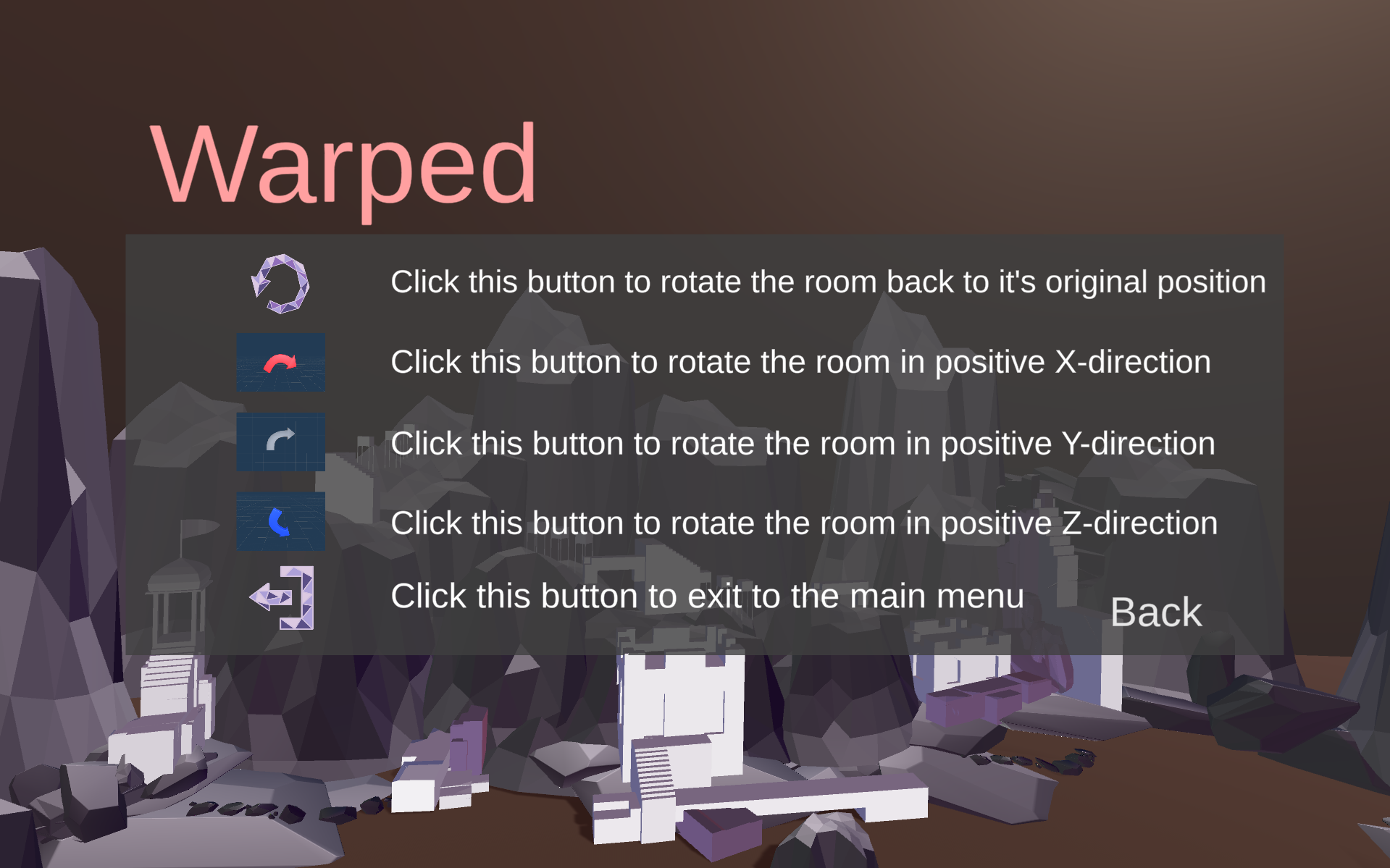
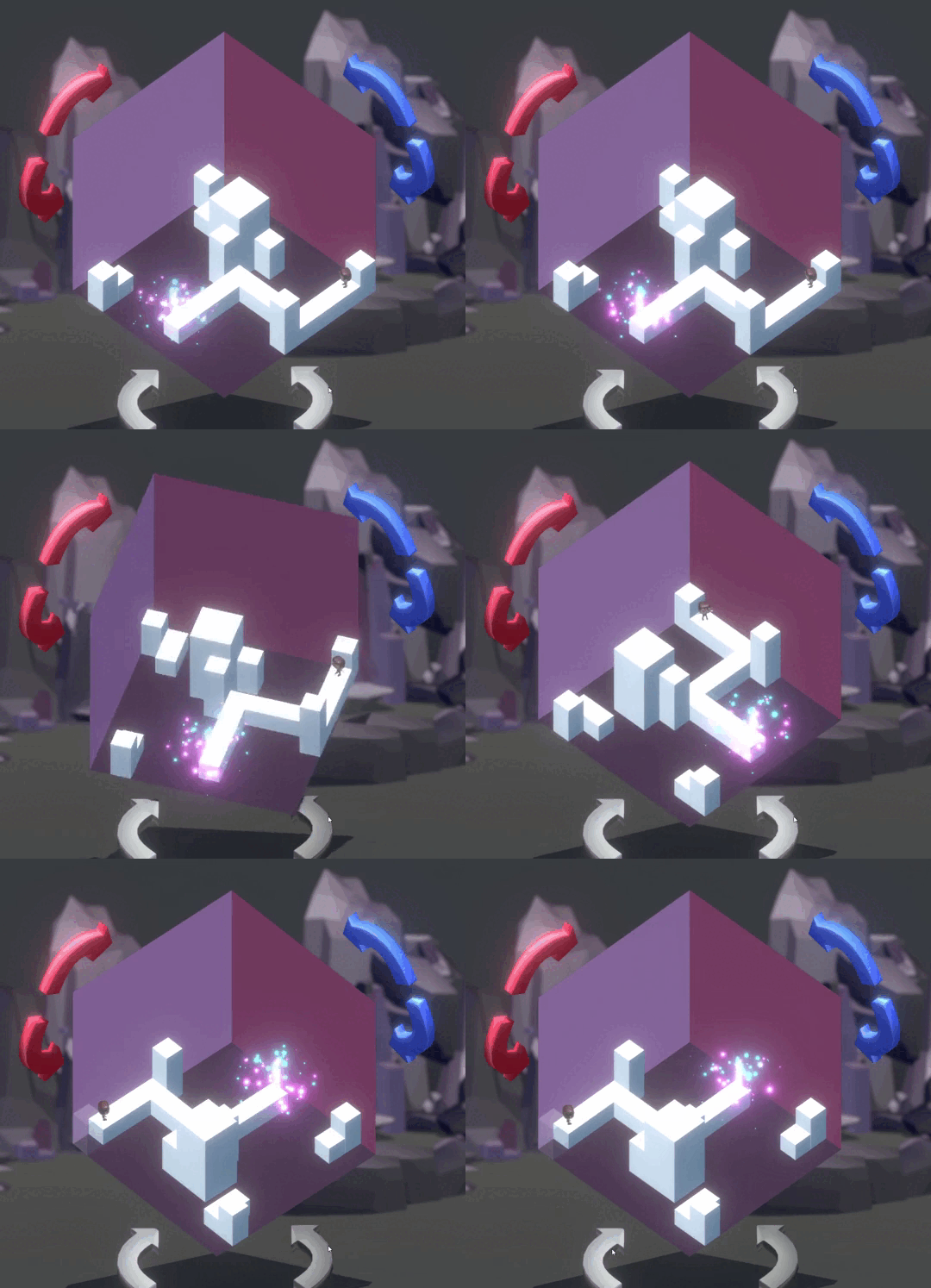
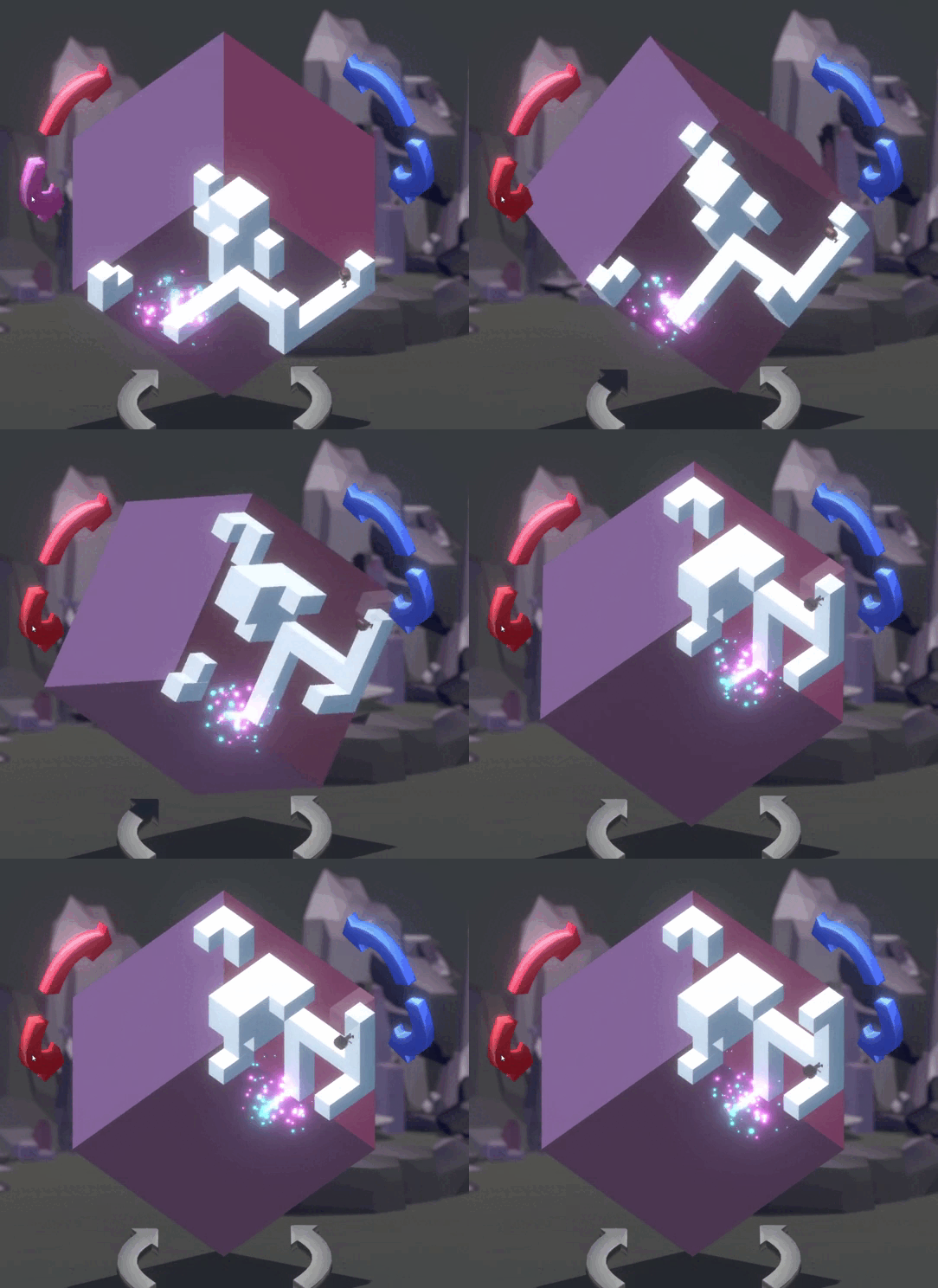
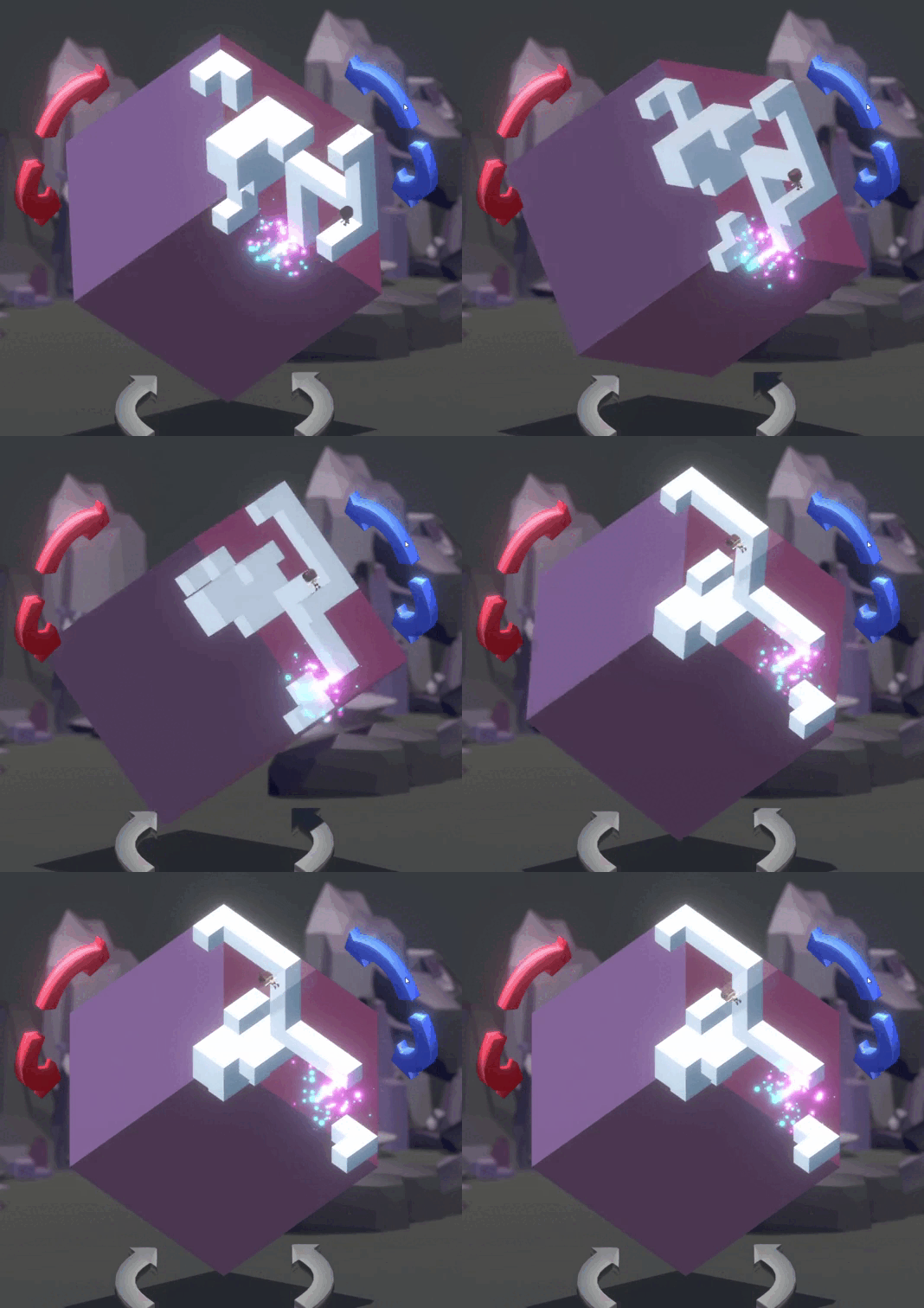
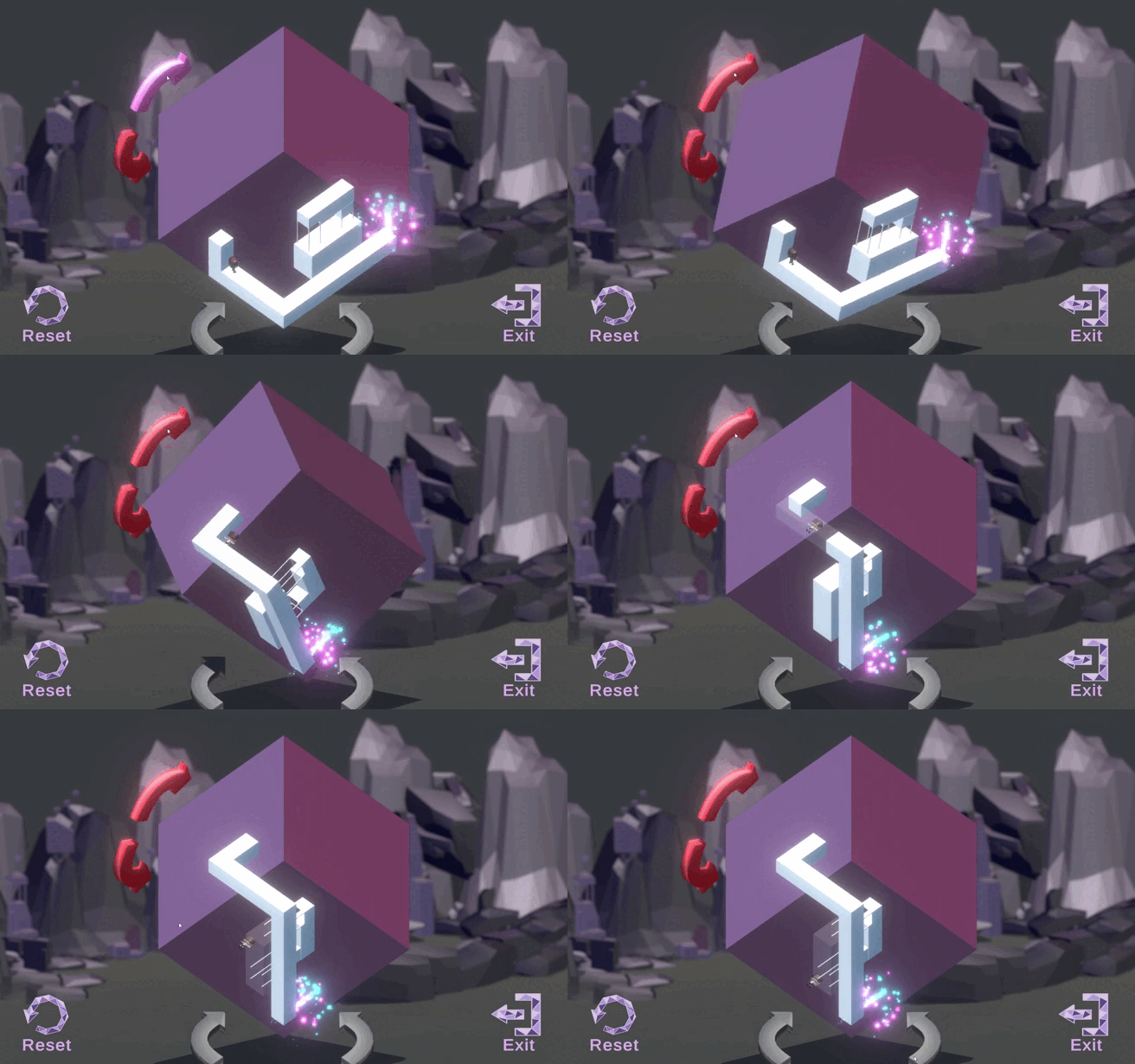
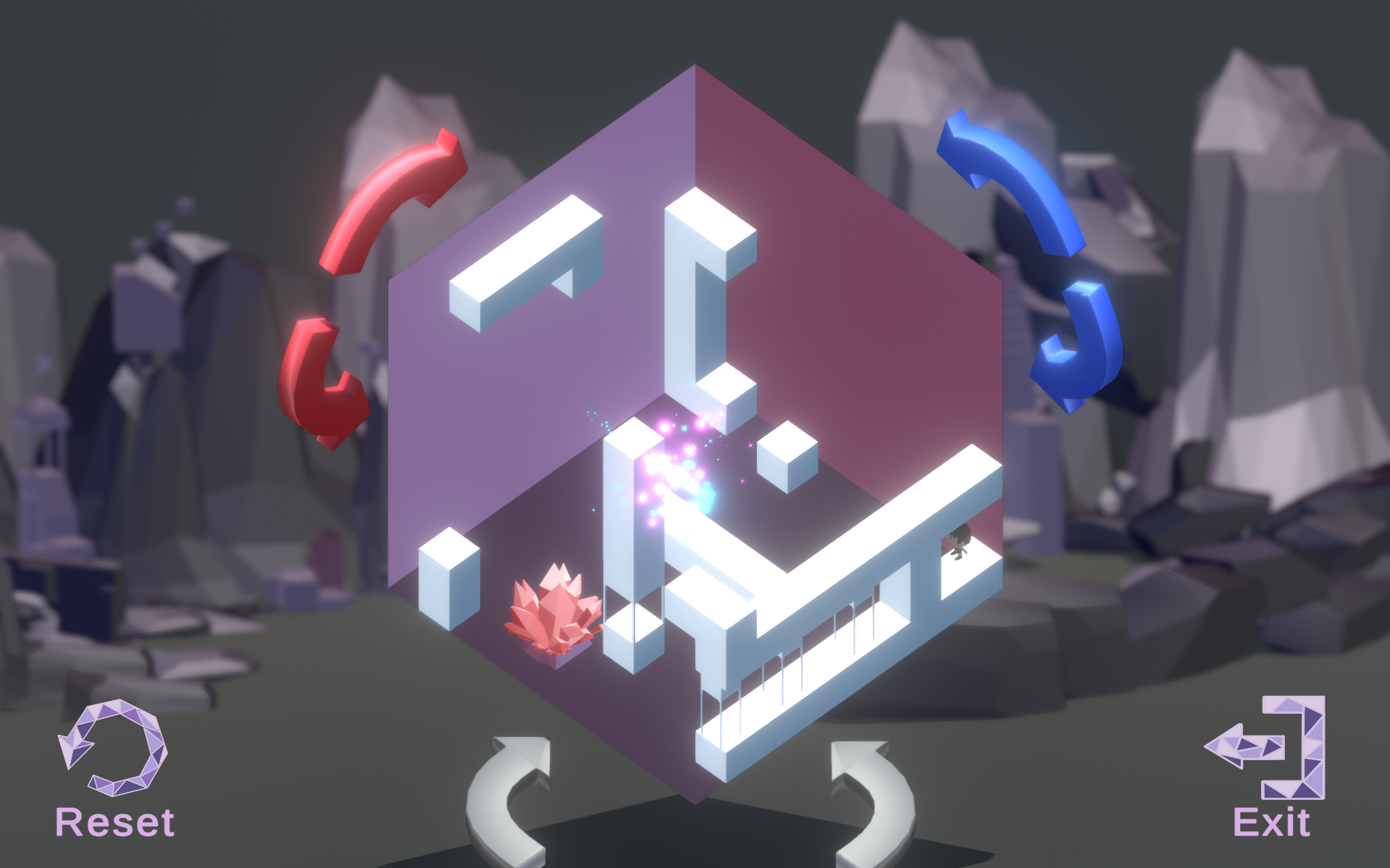
Room Rotation is the core feature of the game. Players can click on arrows to rotate the room in the desired direction. A pair of red arrows controls the positive/negative x-direction, while a pair of blue arrows controls the positive/negative y-direction. These two pairs of arrows allow the character to fall in the corresponding direction. The gray arrows control the rotation along the z-axis, which doesn’t affect the character’s movement but helps players gain a better sense of the room's overall spatial layout.
In terms of rotation speed, the x/y-axis rotations are slower to help players better understand the character's landing position. In contrast, the z-axis rotation is faster and has a shorter cooldown, allowing players to quickly get an overview of the entire room.
Since players might be overwhelmed by the information from three directions and six arrows, in the following levels, I will gradually introduce these arrows to the players. At first, they will only have the 4 arrows in the x and z directions, where the z arrows do not directly affect the game.
Multiple Solution
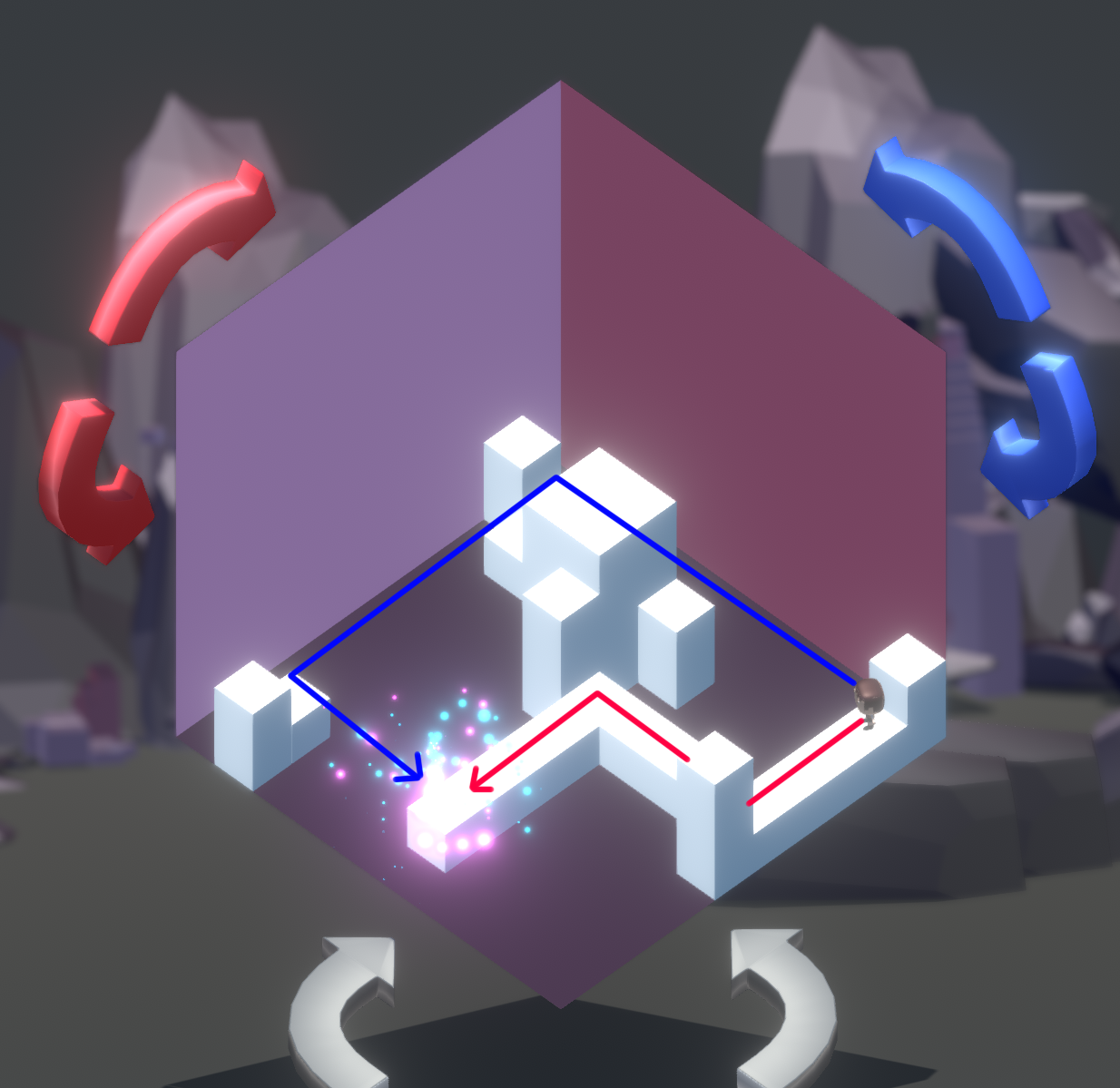
Having multiple solutions is this game's feature. In most puzzle games, the solutions are usually singular. However, in this game, because of the core mechanic of "room rotation," players have a higher probability of failing and restarting. To prevent frustration and enhance the element of surprise, all levels, except for the first three which are purely for teaching and practice, are designed with two possible solutions. This encourages players to discover the second solution while rotating the room and experimenting.
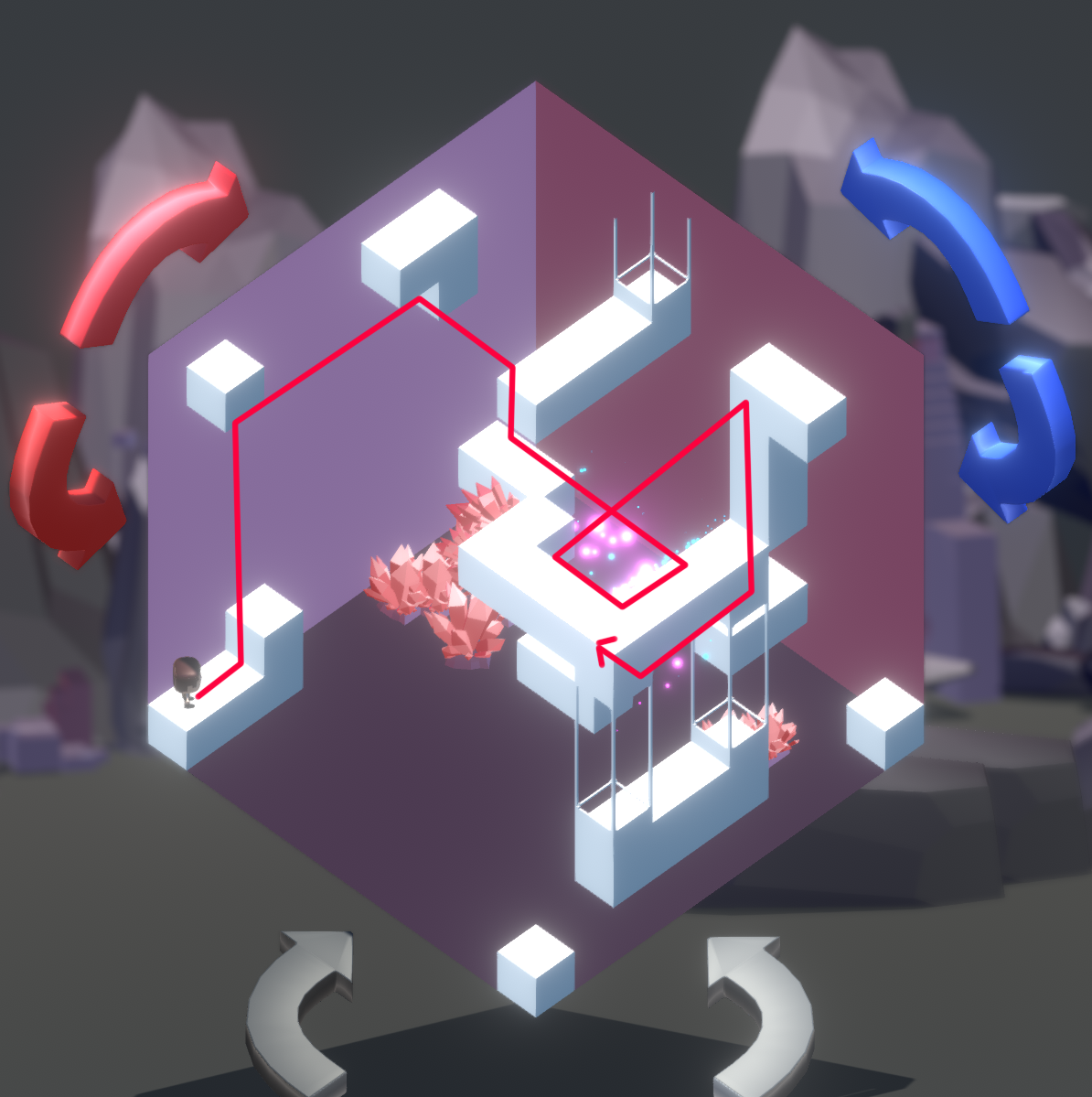
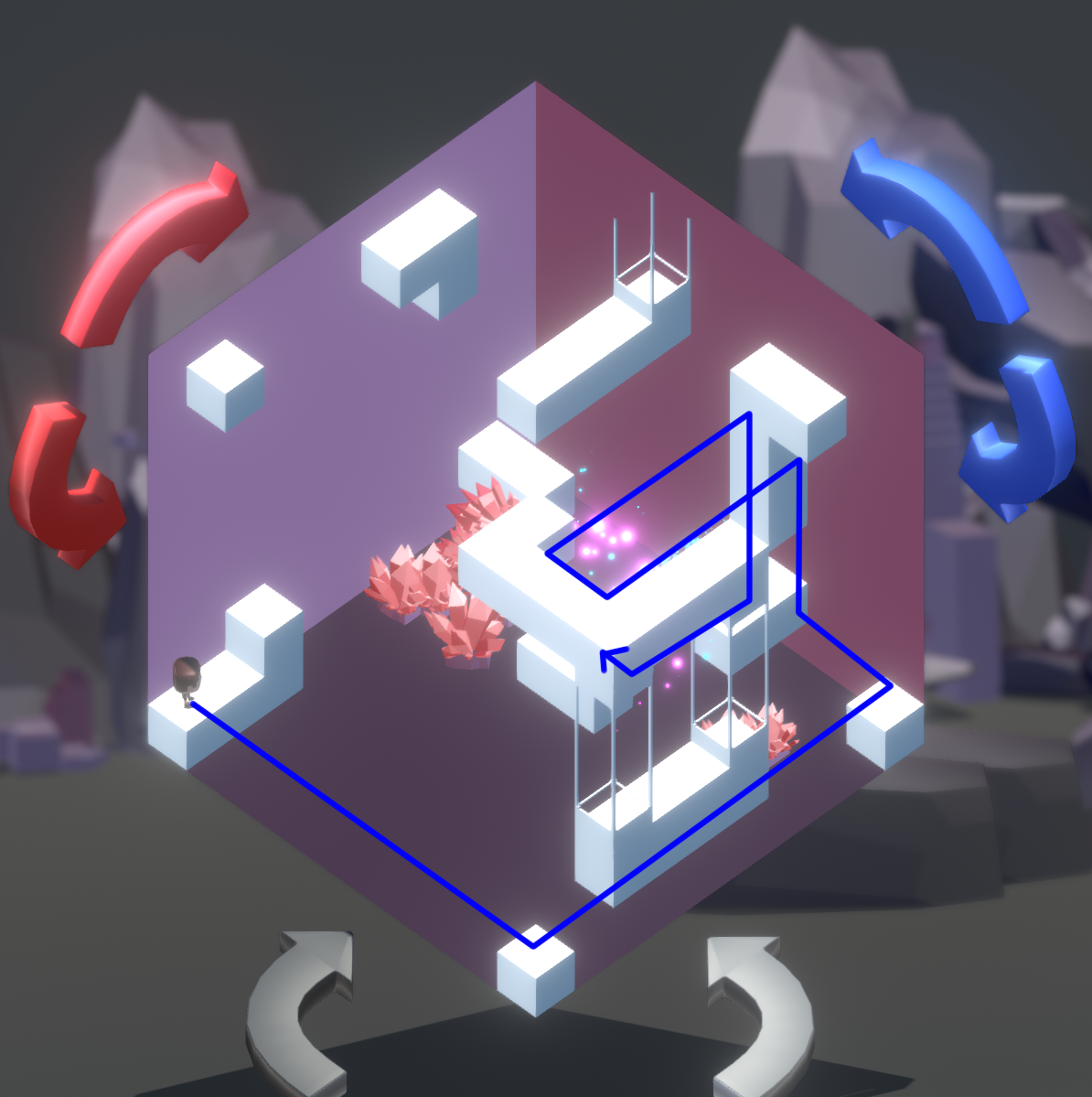
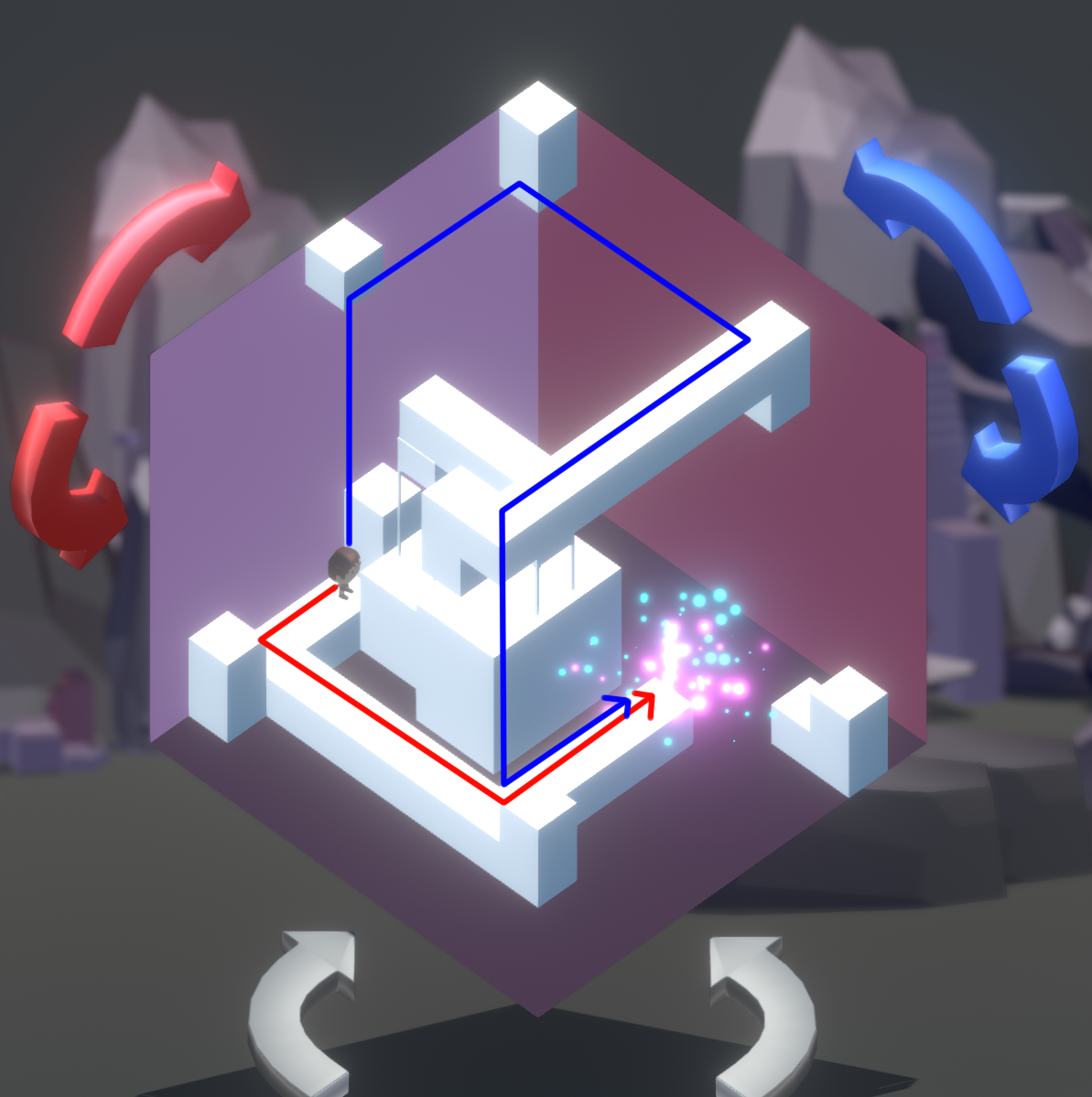
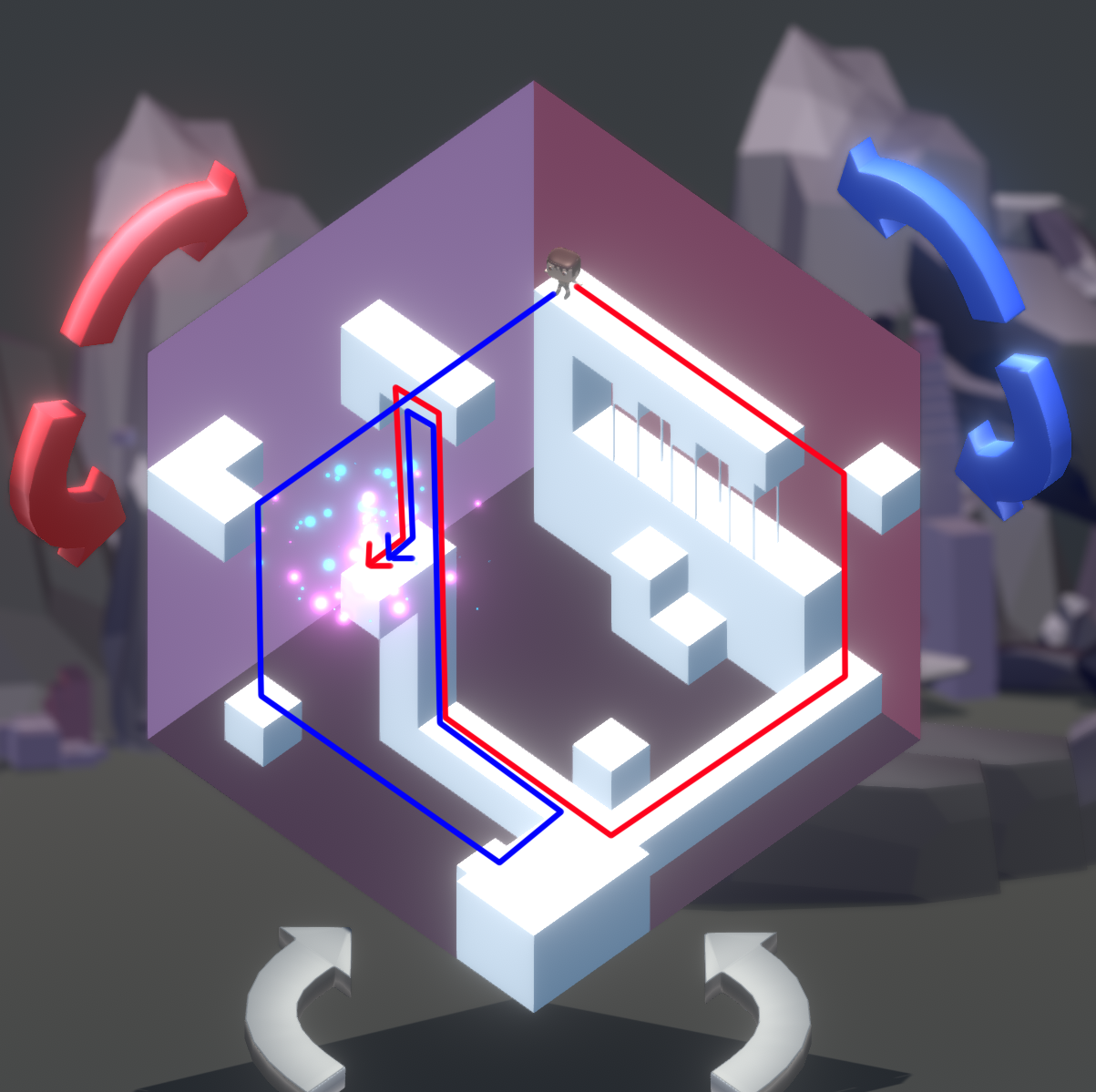
In the design process, I focused on making the first solution obvious, with enough path hints. On the other hand, the path for the second solution is placed more like "decorative elements." Players are likely to ignore the second solution, but as they progress through the levels and the difficulty increases, the contrast between the two solutions will gradually fade. The image on the side will show the two possible solutions for the 4th level, as well as the illustrations of the two solutions for the 8th level.
Instant Death Obstacle
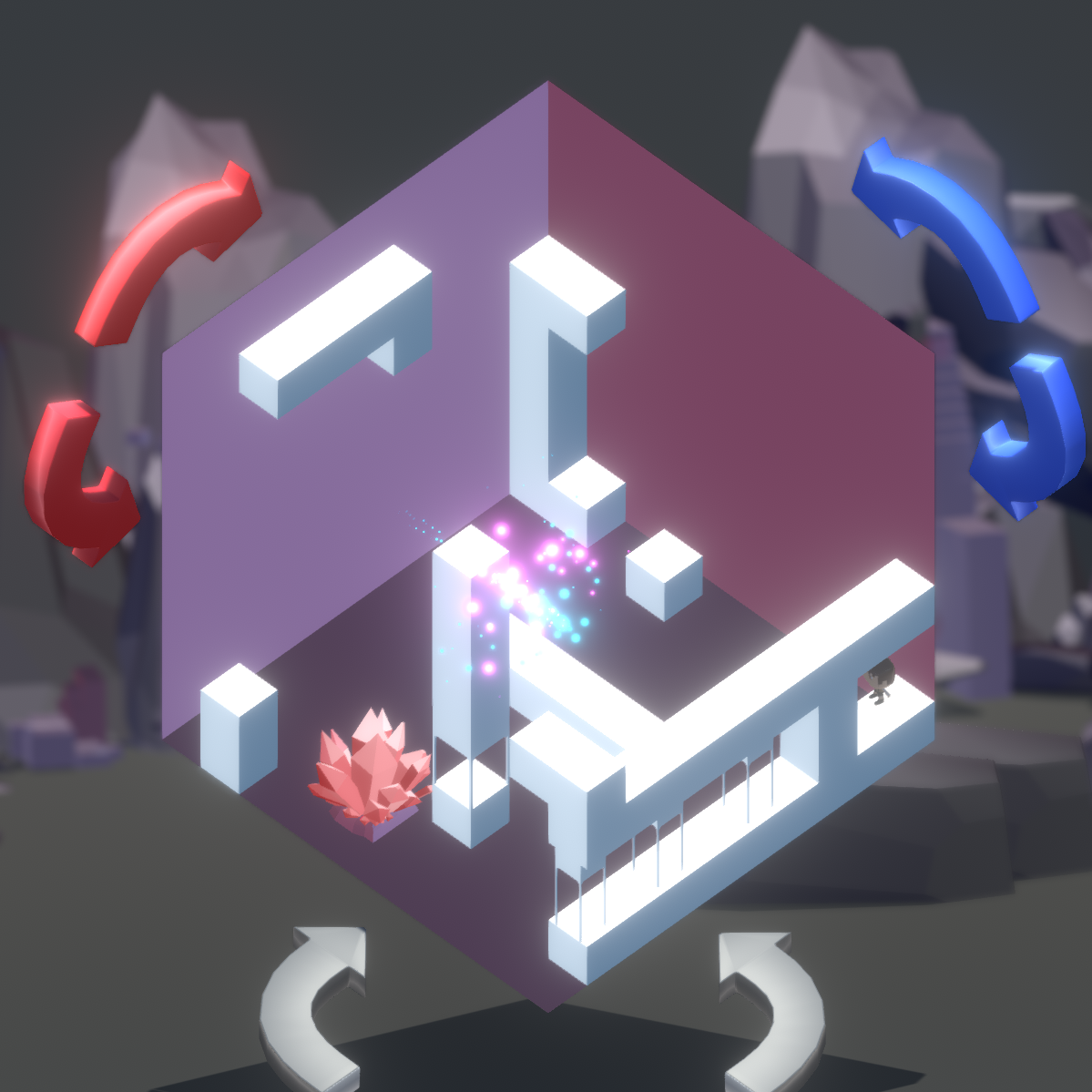
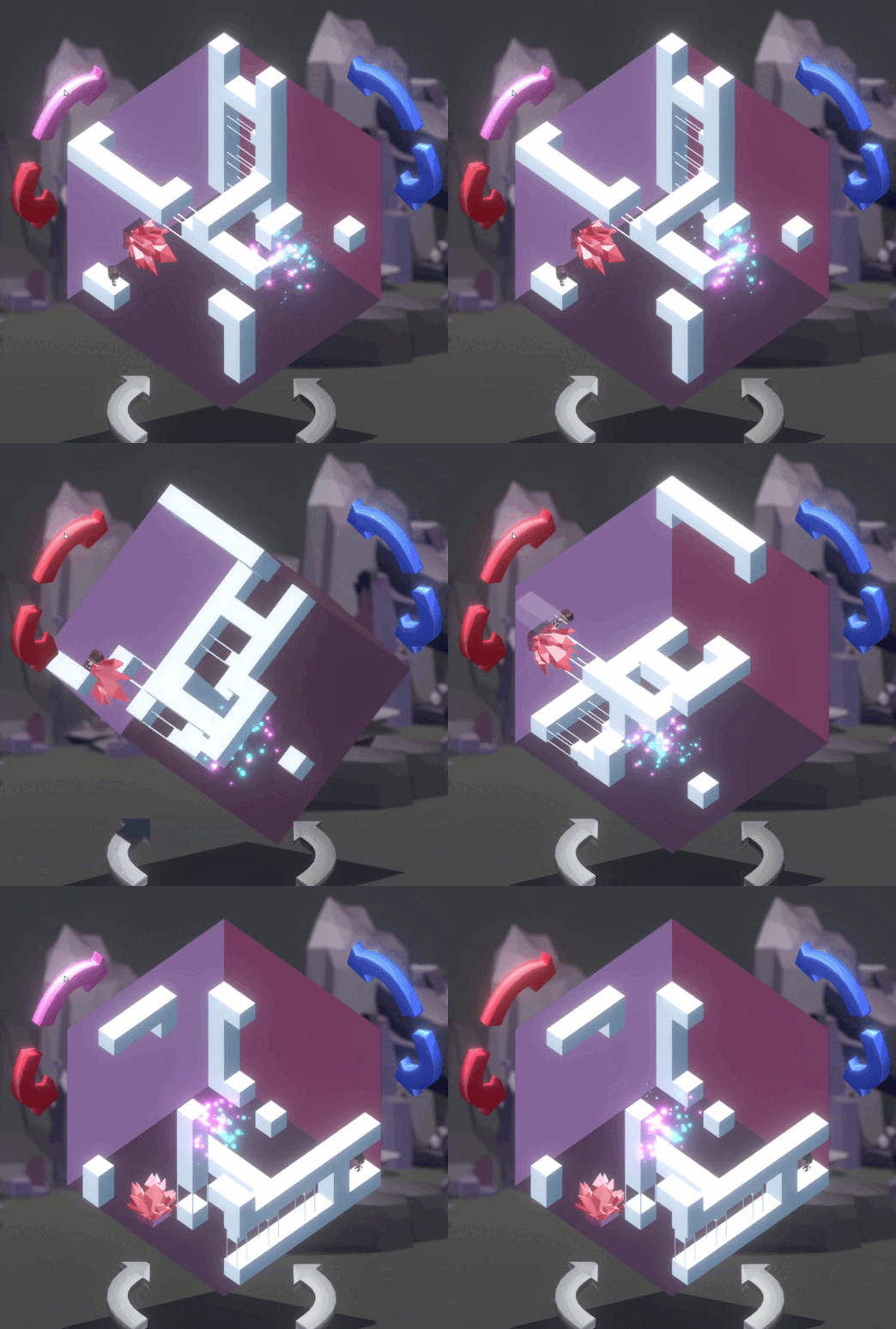
Instant Death Obstacles will appear in the last two levels, increasing the difficulty as players approach the end of the game, in addition to the complexity of the paths. The red color and sharp crystal design serve as clear warnings of their danger. When the character collides with the crystal, the level will be restarted.
Level Design
Onboarding
Dialogue
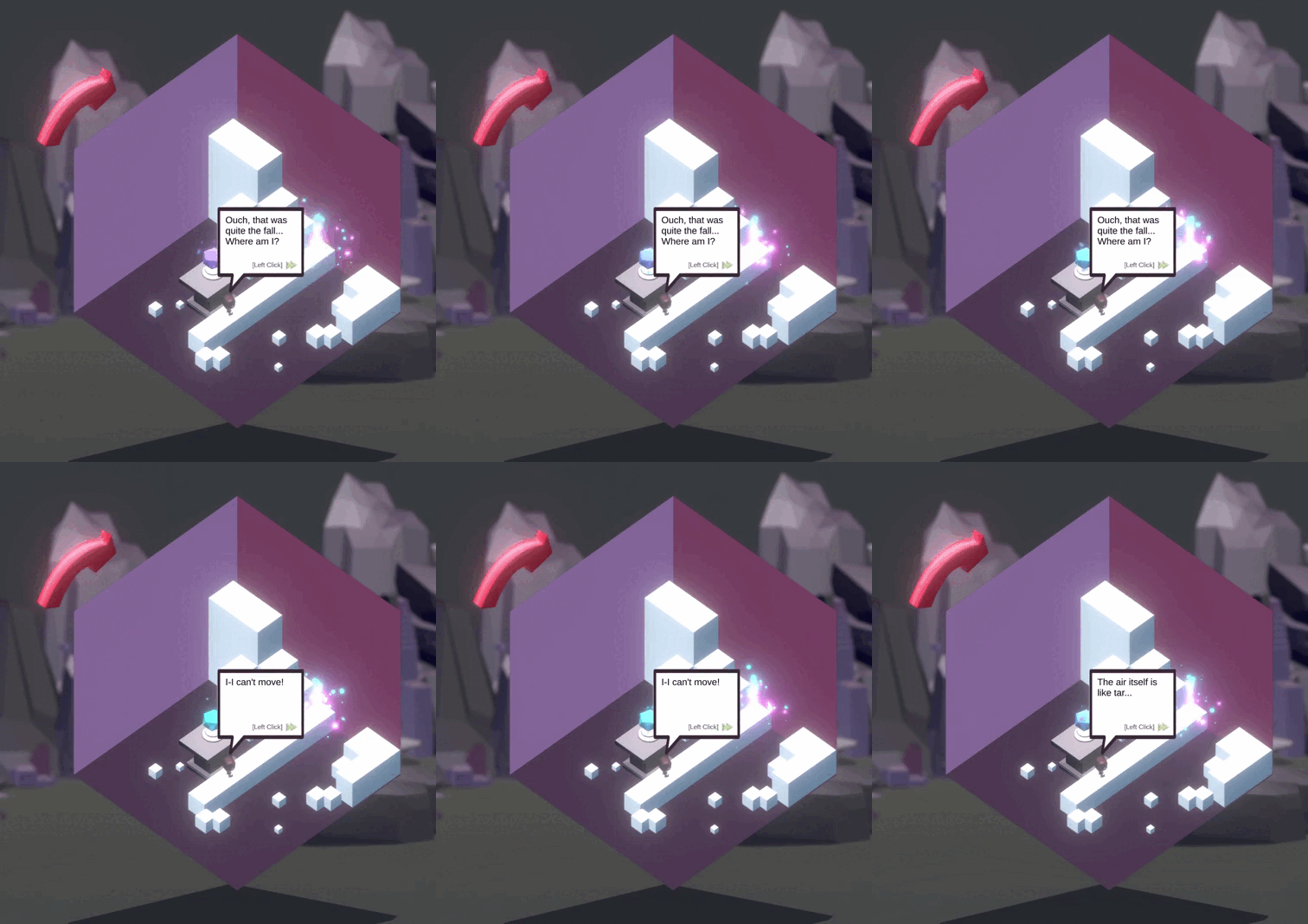
In the opening cutscene, players will watch as the character walks through the mountains and accidentally steps into a hole, leading to a fall. Level 1 will include guided character dialogue to introduce the story's background and teach the mouse-click mechanic.
Visual Cue
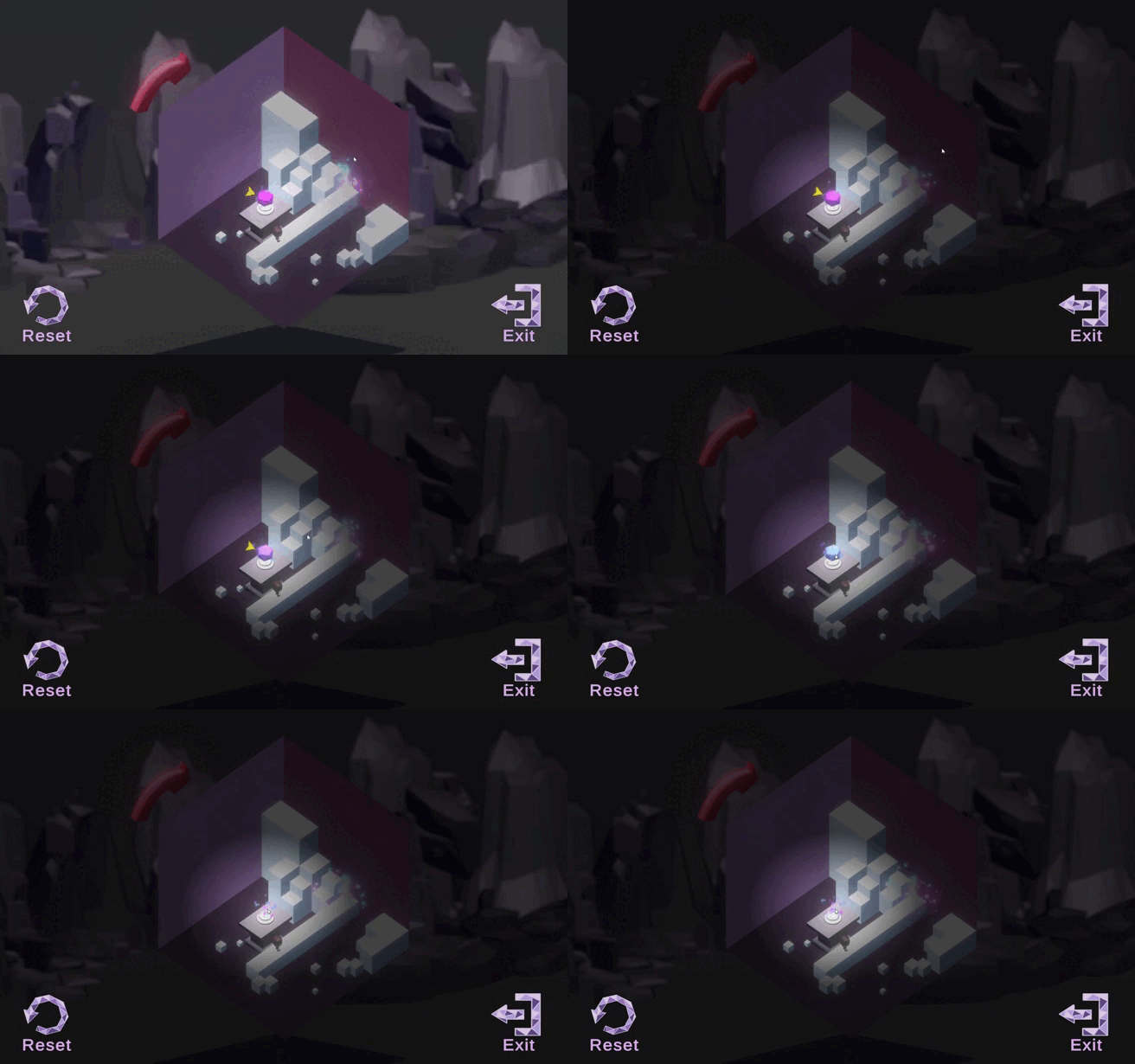
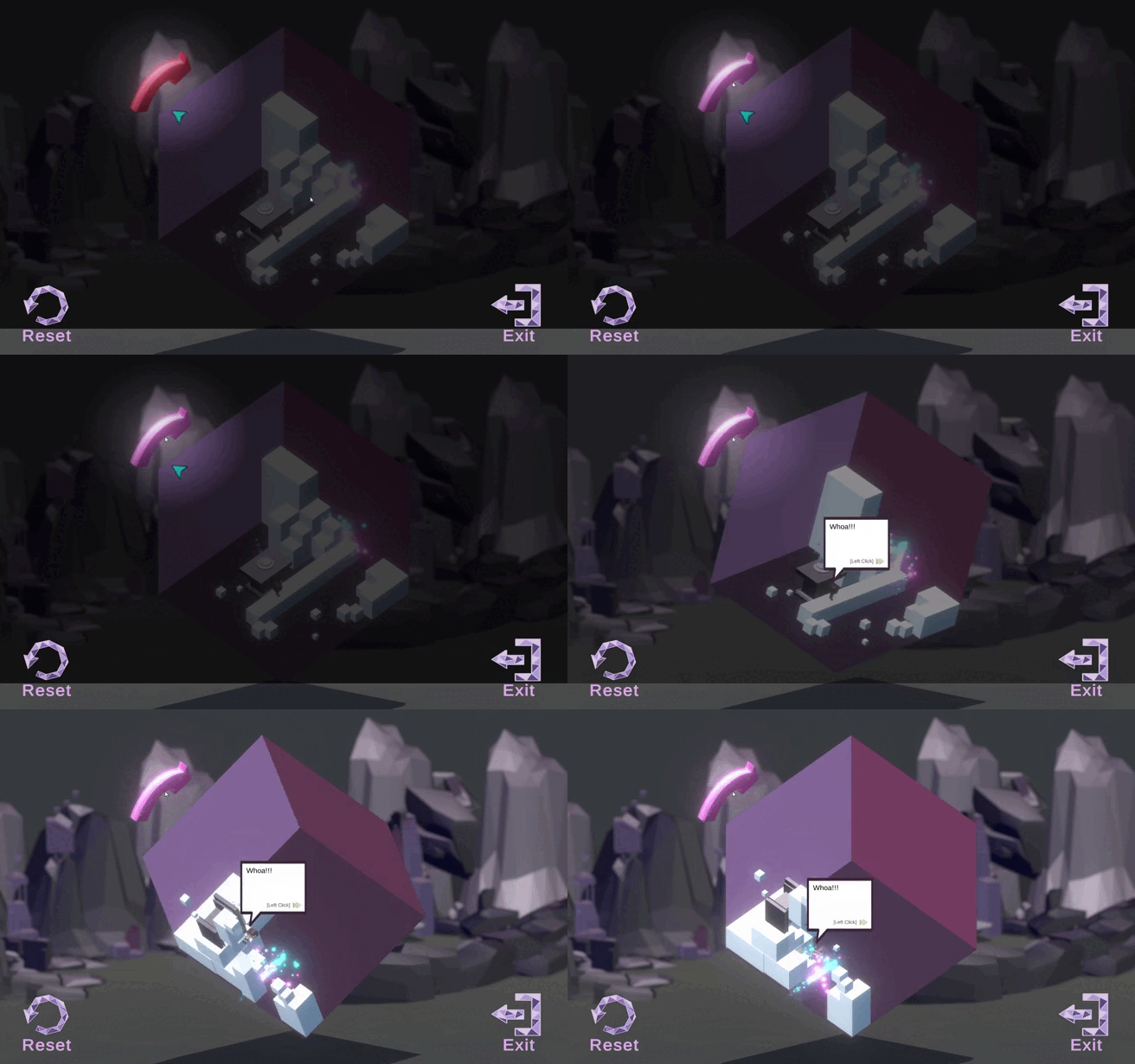
A black overlay and a flashing mouse icon will appear on the screen to guide the player to click on specific items. The player will then receive immediate feedback to help them understand the result of the "click" action.
Practice
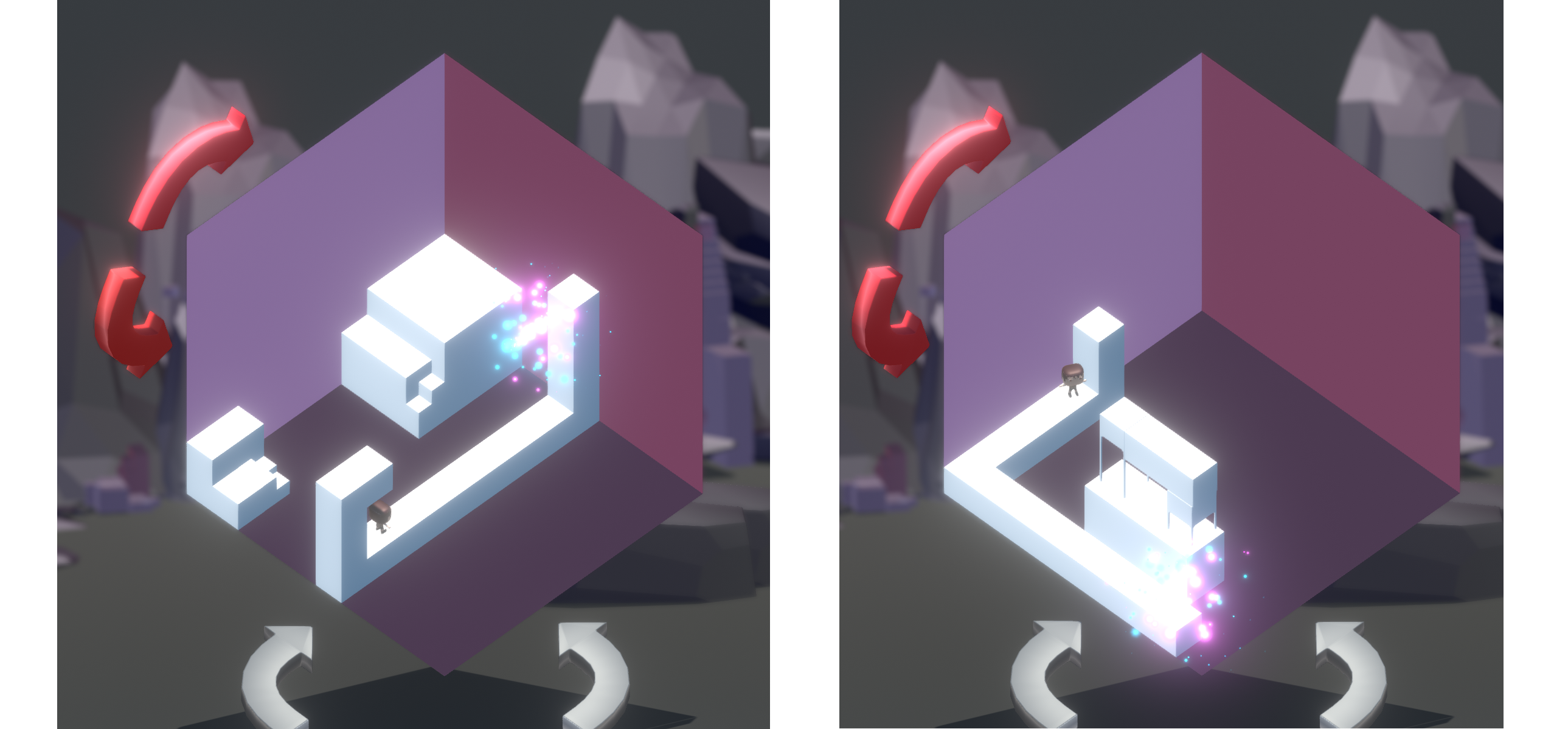
In the next two levels, I designed two simple maps with a single solution. In these levels, players will be able to clearly understand the direction they should rotate. This allows them to focus on practicing how to use the arrows to rotate the room.
The second level (left image) features a decryption path that is a straight line, and the player must use the X-axis button. The third level (right image) presents an L-shaped route, where the player will need to use both the X-axis and Z-axis buttons. Through these two levels, the player can better understand the existing directional arrows.
Progression
After understanding how to use the rotation on the X-axis, the rotation on the Y-axis will also be introduced. At the same time, the difficulty of the levels will gradually increase.
The decorative items within the levels will gradually become more prominent, serving as distractions in the scene. Players won't immediately recognize the solution and will need to develop new strategies and keep trying.
"Fail fast" is the goal I aim for.
If their approach is wrong, they will fall into the blank areas of the scene, clearly signaling that "they have veered off the correct path."
Whenever the player notices that the character has strayed from the correct path, they can use the reset button at any time to reload the level and apply the knowledge they gained from previous attempts.
Art Style & UI Design
Art style
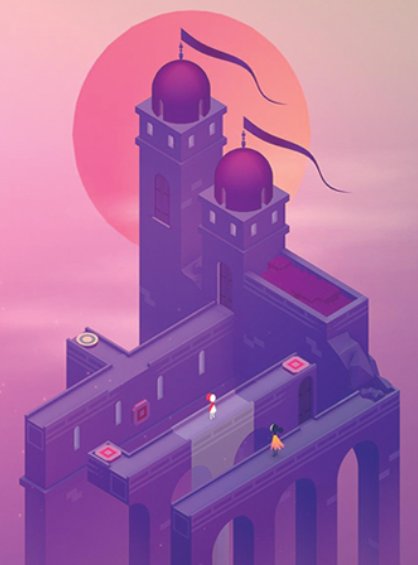
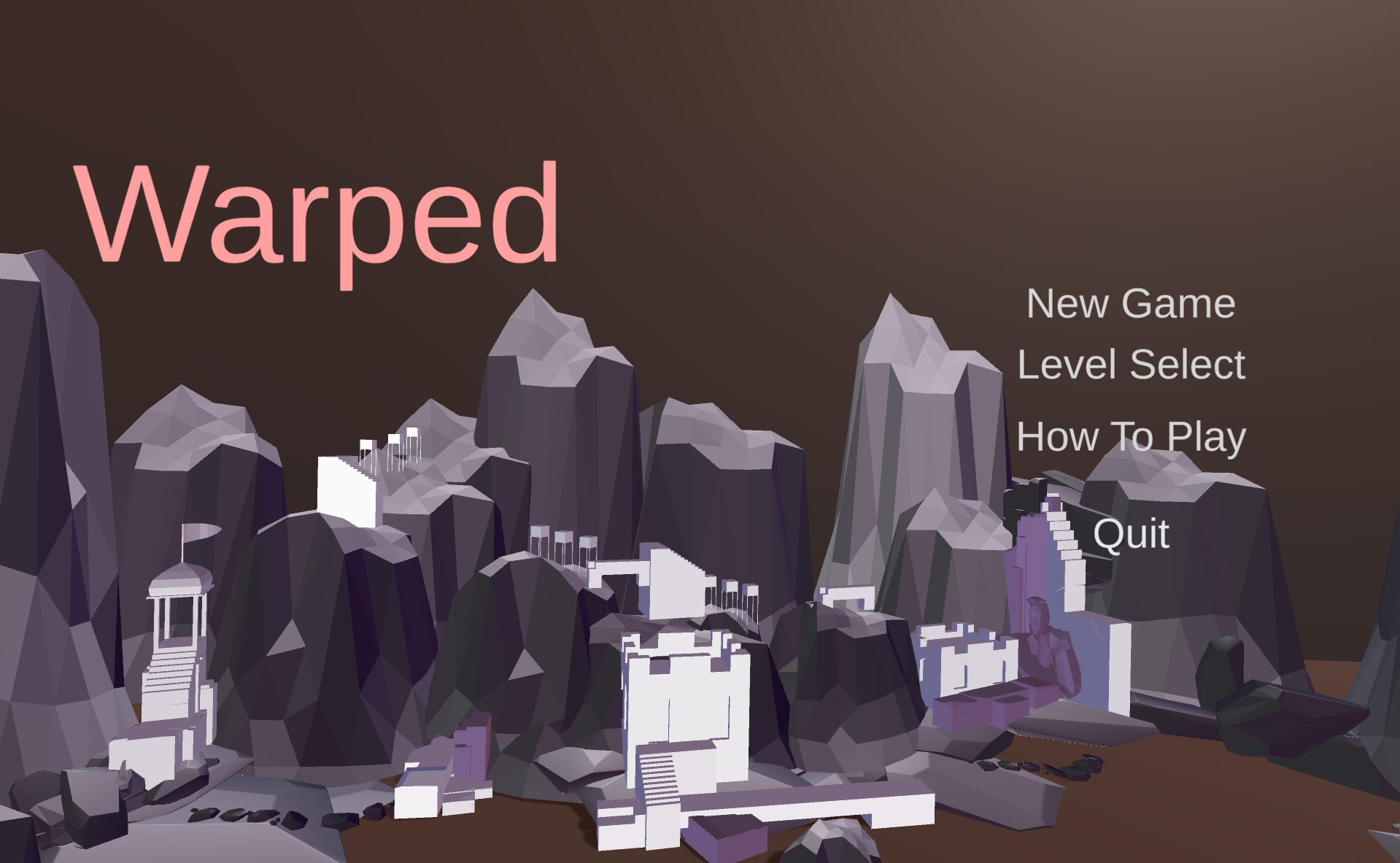
The art style of this game is mainly inspired by the distinctive features of Monument Valley. To create a "mysterious" atmosphere for the player, various shades of purple with different saturations have been used throughout.
After experimenting, I found that using multiple color schemes within the levels would increase the difficulty for players in observing the overall map. Therefore, in the final version, purple was chosen as the color for the room's walls and the background environment outside the room, while the level itself features various shades of blue and white.
UI Design
In the UI design, the "crystal" concept is extended, with crystal shapes integrated into the level selection. For the Skip and Reset buttons, a gem-like cut texture is used to ensure consistency with the game's overall art style.
The overall UI color scheme uses purple, while green, as the complementary color to purple, appears in the cutscene.